
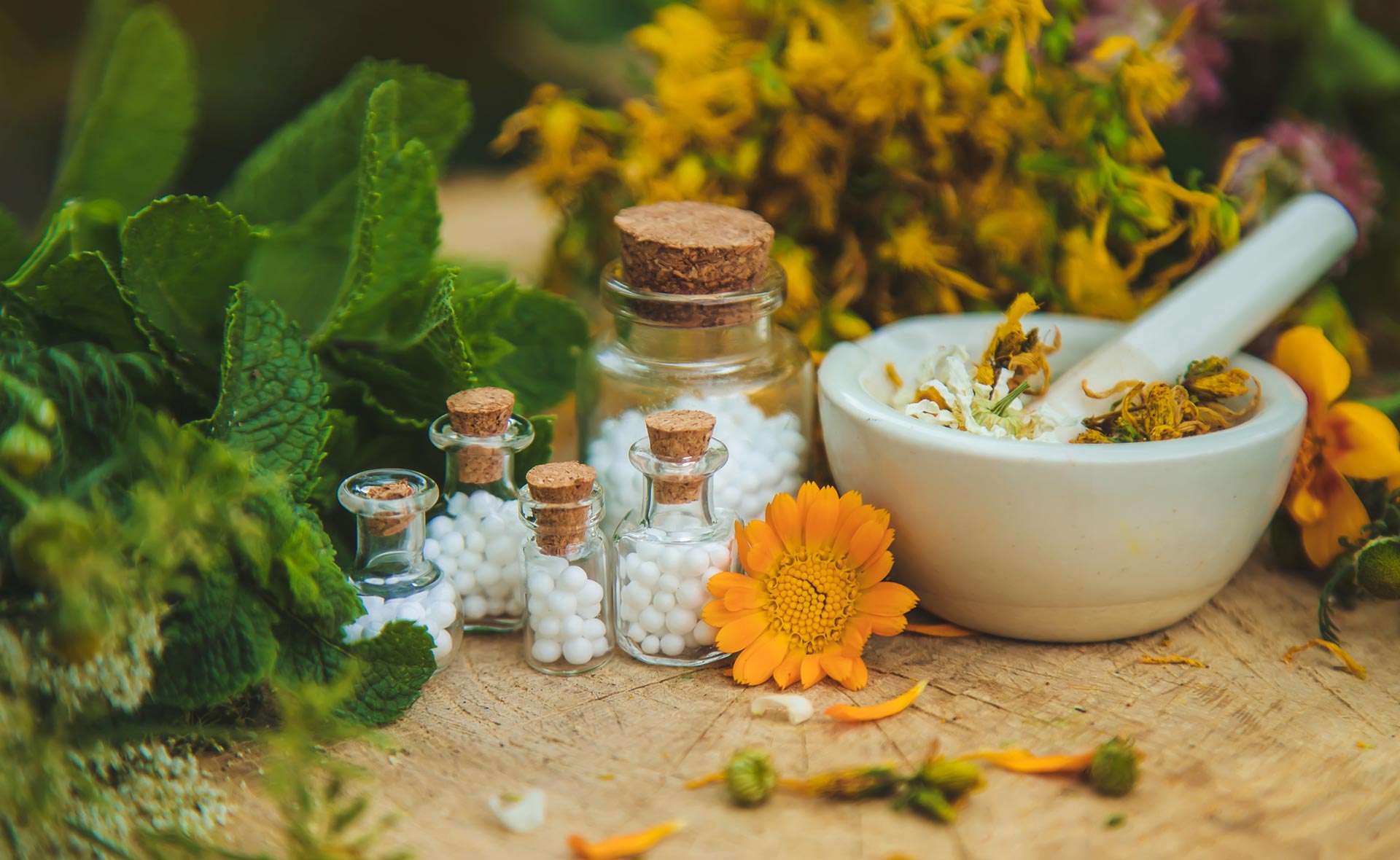
In the vast landscape of modern wellness, few subjects spark as much passionate debate as homeopathy. For some, it is a gentle, life-changing system of medicine that has supported their family for generations. For others, it remains a scientific enigma.
If you’ve ever walked down the “natural health” aisle of a pharmacy, you’ve likely seen the small blue tubes or tiny white pellets. You might have wondered: What actually is this? Is it just herbal medicine? How does it differ from a standard prescription?
Today, we’re peeling back the layers. This isn’t a clinical lecture or a promotional pitch. Instead, we’re taking a human-centric, grounded look at what homeopathy is, the principles it stands on, and why millions of people worldwide continue to integrate it into their healthcare routine.
To understand homeopathy, we first have to clear up a very common misconception. Many people use the word “homeopathic” as a catch-all term for anything natural—like turmeric for inflammation or elderberry for a cold.
However, homeopathy is a specific, distinct system of medicine.
It was developed in the late 18th century by a German physician named Samuel Hahnemann. Disillusioned by the harsh medical practices of his time (which often included bloodletting and toxic doses of mercury), Hahnemann sought a way to trigger the body’s own healing response without causing further harm.
Homeopathy is based on two primary “laws”:
In conventional medicine (Allopathy), the focus is often on the “anti”—antibiotics, antihistamines, anti-inflammatories. The goal is typically to suppress or kill the external invader or the uncomfortable symptom.
Homeopathy takes a different fork in the road. It views symptoms not as the “enemy,” but as the body’s outward expression of an internal imbalance.
Think of a fever. From a homeopathic perspective, the fever is the body’s intelligent effort to burn off an infection. Rather than just “turning off” the fever, a homeopath looks for a remedy that matches the unique way that specific person experiences the fever.
Because two people with the same “cold” might feel completely different, they would likely receive two different homeopathic remedies. This is the hallmark of Individualized Medicine.
This is often the point where skeptics and supporters part ways. Homeopathic remedies undergo a process of serial dilution.
A mother tincture (the original substance, like a plant or mineral) is diluted in water or alcohol, then shaken vigorously. This is repeated dozens or even hundreds of times. By the time a remedy reaches a “30C” potency, there is mathematically not a single molecule of the original substance left in the liquid.
The Question of “Water Memory” How can something work if there’s “nothing” in it? Proponents point to the theory of water memory—the idea that the process of succussion imprints the energetic “signature” or frequency of the substance onto the water molecules. While this remains a frontier of science that current technology struggles to measure, many users report profound shifts in their health that they feel cannot be attributed to a placebo effect alone.
It’s important to address the “Placebo” elephant in the room. Critics often argue that because the remedies are so diluted, any benefit must be purely psychological.
However, those who use homeopathy often point to two interesting counter-arguments:
Regardless of the “how,” the grounded perspective is often focused on the “result.” If a person feels better, sleeps better, and has more energy without the side effects of heavy medication, that is a clinical win for that individual.
If you decide to see a professional homeopath, don’t expect a five-minute chat and a quick prescription. An initial intake usually lasts 60 to 90 minutes.
Because homeopathy is holistic, the practitioner will ask about:
They are looking for the “Simillimum”—the one remedy that matches your entire “picture” at this moment in time.
You may have already used homeopathy without realizing it. Here are a few “staples” found in many natural first-aid kits:
One of the greatest appeals of homeopathy is its safety profile. Because the doses are so highly diluted, they are generally:
The “But” (A Common Sense Check): Safety also depends on the user’s judgment. Homeopathy should be used as a complement to, not necessarily a replacement for, emergency medical care. If you have a broken leg, a severe allergic reaction, or a life-threatening infection, the “grounded” approach is to seek immediate conventional medical attention. Homeopathy can then be used alongside to support the healing and recovery process.
The future of health seems to be moving toward Integrative Medicine. We don’t have to choose between the life-saving technology of modern surgery and the gentle, holistic support of homeopathy.
Many people use “The Best of Both Worlds” approach:
At its heart, homeopathy is a lesson in listening. It asks us to slow down and notice the nuances of how we feel. It reminds us that our bodies are not broken machines that need to be silenced, but living systems that are constantly trying to communicate.
Whether you are a firm believer or a curious skeptic, the rise in homeopathy’s popularity speaks to a deep human desire for healthcare that is personalized, gentle, and treats us as a whole person—mind, body, and spirit.
WhatsApp us